
The Role of Sewage Treatment Plant (STP)
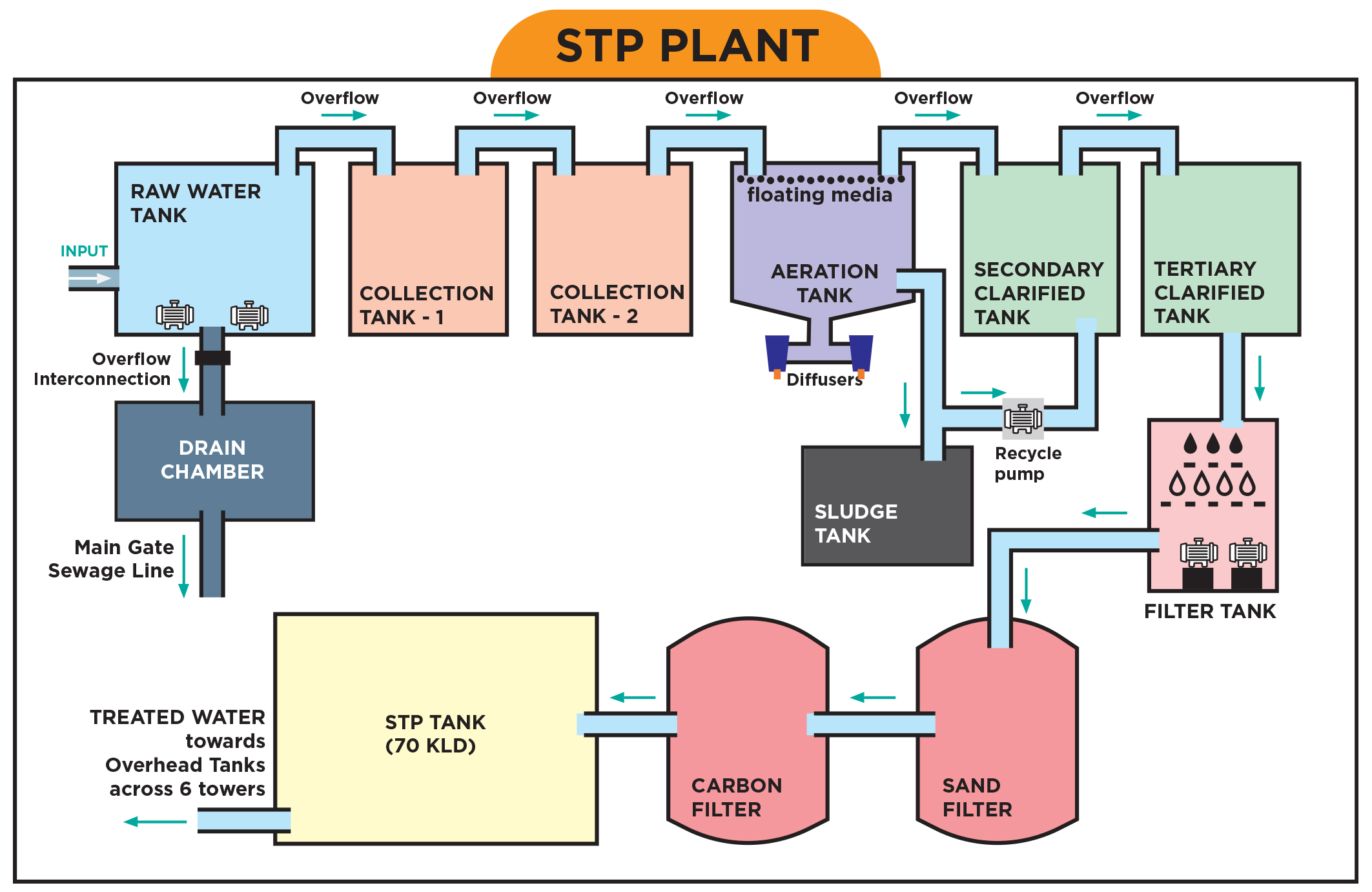
The Sewage Treatment Plant (STP) at Ashok Gardens is a system designed to treat and purify wastewater generated within the community. It employs a series of processes to remove contaminants, solids, and harmful substances from sewage, rendering it safe for reuse or environmentally friendly disposal.
Operational Processes
- Primary Treatment: The sewage undergoes initial screening to remove large debris and solids. This is followed by sedimentation, where suspended particles settle to the bottom.
- Secondary Treatment: Biological processes take centre stage as beneficial bacteria break down organic matter in the sewage. This stage helps in further reducing contaminants and improving water quality.
- Tertiary Treatment: In this advanced stage, the treated water undergoes filtration and disinfection to meet stringent standards for reuse in irrigation or non-potable purposes.
Precautions and Safety Measures
- Regular Maintenance: The STP undergoes routine inspections, maintenance, and cleaning schedules to ensure all components are functioning optimally. This includes pumps, filters, aerators, and treatment tanks.
- Monitoring and Testing: Skilled technicians regularly monitor the STP’s performance through water quality testing. Parameters such as pH levels, dissolved oxygen, turbidity, and bacterial content are closely monitored to maintain compliance with environmental standards.
- Chemical Handling Safety: Proper protocols are in place for the safe handling, storage, and dosing of chemicals used in the treatment process. The AMC Staff are trained in handling these substances with care to prevent accidents or environmental contamination.
- Emergency Response Plan: Ashok Gardens has a comprehensive emergency response plan in place for any unforeseen incidents or malfunctions. This ensures swift action and containment measures in case of system failures.
- Odour Control: Measures such as air scrubbers and biofilters are employed to minimise odours emanating from the STP, ensuring a pleasant living environment for residents.
Benefits of STP Operations
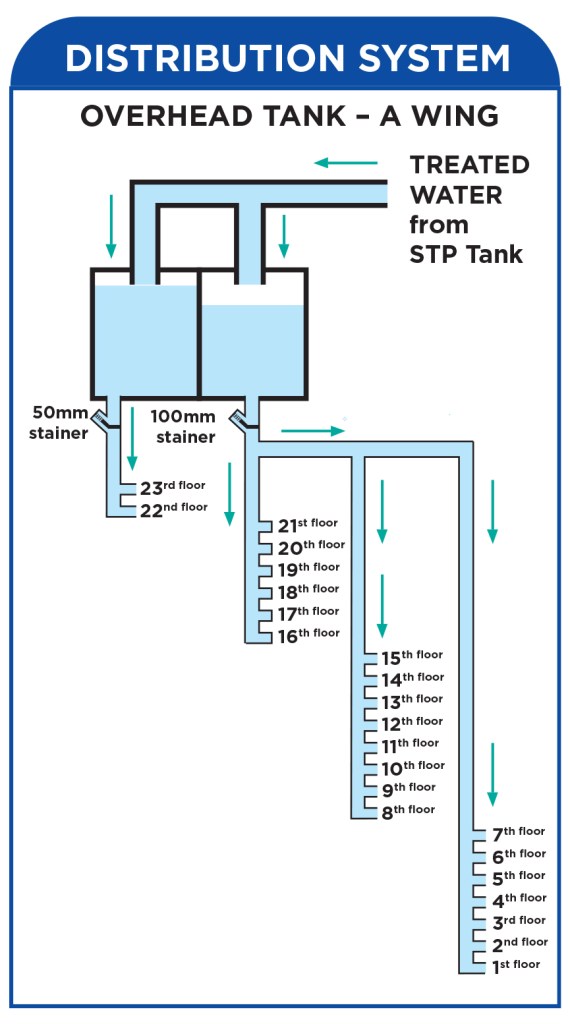
- Water Conservation: The treated water from the STP can be reused for irrigation, landscaping, and flushing, reducing dependency on freshwater sources.
- Environmental Protection: By treating wastewater effectively, Ashok Gardens prevents pollution of water bodies and reduces the impact on the ecosystem.
- Sustainable Practices: The STP aligns with the community’s commitment to sustainability and responsible resource management, contributing to a greener living environment.
- Cost Efficiency: Utilizing treated wastewater for non-potable purposes saves on water bills and reduces the community’s ecological footprint.
Precautions to be taken by AG Residents for efficient functioning of STP Plant
We should completely avoid throwing any such thing in flushes:
- Bottles – Liquor, medicinal etc
2. Nappies
3. Sanitary pads
4. Condoms
5. Waste cloth
6. Clothes, plastics etc
7. Any other Non-human waste
This will help in saving lot of efforts and lowering costs as these articles damage our cutter pumps. The flushing system is not a disposal system for such waste rather it is only meant for human waste. The functioning of STP is dependent a lot on our responsible behaviour too.
Conclusion
The Sewage Treatment Plant at Ashok Gardens stands as a beacon of sustainable water management and environmental stewardship. Through its efficient operation, stringent precautions, and community involvement, the STP not only ensures a clean and safe living environment but also sets a standard for responsible urban development.
As Ashok Gardens continues its journey towards a more sustainable future, the STP remains a cornerstone of its commitment towards water conservation, environmental protection, and community well-being.
By understanding the intricacies of STP operation and practising the necessary precautions, Ashok Gardens demonstrates that sustainability is not just a goal—it’s a way of life.
 Ashok Gardens
Leave a comment